
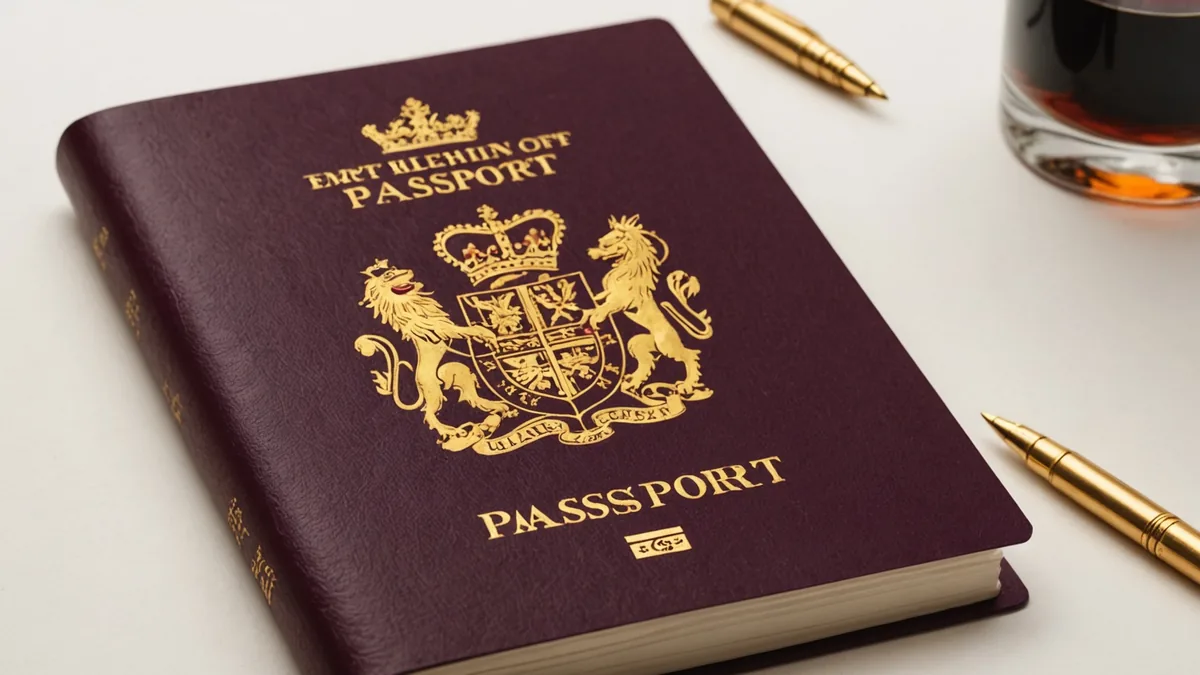
Travel agencies handling Standard Visitor Visa applications for UK-bound clients started seeing more initial rejection letters from UKVI in the first half of 2026. In most cases, the letters cited financial evidence that did not meet current guidance, or photographs that failed automated format checks. Neither issue was new in category, but the threshold and enforcement pattern shifted enough to produce a noticeable bump in documentation requests.
This post covers what specifically changed, which document classes are most affected, and what agencies need to verify before compiling the next Standard Visitor Visa packet.
What Changed in Financial Evidence Requirements
The most operationally significant update concerns how financial evidence is interpreted. Earlier guidance focused primarily on whether the bank account balance was sufficient to cover the planned stay. The updated guidance places additional weight on the pattern of funds over time: a consistent account history is treated differently from an account showing a large recent deposit with a short prior history.
In practical terms, this means a client who transferred a substantial sum into their account two weeks before the application date may now receive a financial evidence query even if the total balance looks adequate on paper. UKVI officers are instructed to consider whether the funds are genuinely the applicant's own resources and whether the account shows a credible ongoing financial picture.
For agencies, the implication is straightforward: bank statements should now cover at least six months of transaction history, and the statements need to show a pattern of regular credits and a balance that has not arrived suddenly. If a client's financial situation involves recent incoming transfers, a covering letter explaining the source of funds has become more important than before.
The six-month coverage requirement is not entirely new; some UKVI guidance documents referenced it previously. But enforcement through the initial documentation check has become more consistent in 2026, and applications supported by only one or two months of statements are now routinely returned for supplementary evidence.
Photo Specification Changes and Automated Validation
The Standard Visitor Visa application uses an online form where photographs are uploaded digitally. UKVI introduced stricter automated photo validation at the upload stage in early 2026. The core specifications (45mm x 35mm, plain white or light grey background, neutral expression, eyes open and clearly visible) have not changed in themselves, but the automated validator now catches a wider range of borderline cases that previously passed the upload check.
Common failure modes reported through the system:
- Backgrounds with a slight off-white or cream tint that register as non-compliant in the validator's color threshold
- Photos where eyeglasses are worn; UKVI guidance requests no glasses, and the validator is now more consistent in flagging this
- Photos where the face is positioned slightly low in the frame, resulting in excessive headroom at the top and too little chin clearance at the bottom
- Images with compression artifacts from repeated saving at low quality, which can produce face-boundary ambiguity in the validator
The practical recommendation: use a photo taken specifically for this application, against a verified white or very light grey background, without eyewear. If the client's existing photograph was taken for another country's visa application, verify that it meets UKVI dimensions specifically before reusing it. Different embassies accept different formats, and a photo that passed for a Schengen application may not pass UKVI's validator.
Digital Document Submission Standards
A secondary update relates to the quality requirements for digitally submitted supporting documents. PDF scans are expected to be clearly legible, with consistent page orientation and readable stamps or signatures. Cropped or low-resolution scans of bank statements where page headers (bank name, account number, statement period) are partially cut off are being returned more consistently in 2026.
The specific issue we see in application packets is a bank statement where the client has photographed individual pages at slightly different angles, creating a PDF where some pages are portrait and some effectively sideways. The content may be technically readable, but the formatting inconsistency triggers a documentation quality flag.
The straightforward fix is to request that clients provide bank-issued PDF statements downloaded directly from online banking, rather than scanned paper statements. Most major Indian banks provide downloadable PDF statements that are formatted consistently and include bank letterhead on every page. Where the client's bank does not offer this, the agency should request a certified printed statement with a bank stamp, scan it consistently, and ensure page orientation is uniform throughout the PDF.
What Did Not Change
It is worth being clear about what the 2026 updates did not change, to avoid over-correcting the preparation process.
The core document list for a Standard Visitor Visa application remains the same: valid passport, completed online application form (UKVI sign-in), financial evidence, proof of accommodation, evidence of purpose and planned itinerary, and evidence of employment or studies. These have not changed in substance.
Travel history requirements are also unchanged. Previous UK visas and other international travel visas remain relevant as supporting credibility evidence, but there is no new mandatory disclosure requirement beyond what was already in the application form.
The employment letter format requirements have not changed either. An employer letter on company letterhead confirming the applicant's position, salary, and leave approval for the travel period remains the standard. There is no new requirement for notarization or apostille on this document for most applicant profiles.
A Pattern Worth Noting for Agency Workflows
One pattern that agencies handling volume applications for UK standard visitor visas have observed: the change in financial evidence interpretation is not evenly distributed across applicant types. Employed applicants with salary credits visible in monthly bank statements are less affected, because the credit pattern is self-evident. Self-employed applicants and business owners are more affected, because their account activity may show irregular credit patterns even when the underlying financial position is strong.
For a Chennai-based agency processing a group of eight applicants in March 2026, including three self-employed individuals, the financial evidence review flagged all three self-employed packets for supplementary documentation. The employed applicants' packets moved through without query. The fix was to include ITR (income tax return) filings and business bank account statements alongside personal account statements, providing a fuller picture of financial standing rather than a single account view.
This kind of applicant-profile-specific preparation has always been important for the UK Standard Visitor Visa; the 2026 updates have simply made the consequences of missing it more immediate.
Keeping Your Checklist Current
UKVI guidance documents are updated periodically, and the updates do not always receive wide announcement in advance. Appendix V of the Immigration Rules is the authoritative source for Standard Visitor Visa requirements; the Immigration Rules themselves are published in full on the UK legislation website.
We are not saying the 2026 updates represent a fundamental restructuring of the Standard Visitor Visa process. They are incremental adjustments to financial evidence interpretation and photo format enforcement. But incremental adjustments at the document level are exactly where application packets fail, and exactly where a structured pre-submission review catches the gap before the packet reaches the embassy.
Agencies running 10 or more UK applications per month should review their financial evidence guidance and photograph specification checklists against the current Appendix V text, not against the version they last reviewed. Requirements are not static, and a checklist built 12 months ago may not reflect current enforcement practice.
One final note: this post reflects our reading of current UKVI guidance as of mid-2026, based on application patterns we see. It is not legal advice. Requirements can change between published guidance updates, and specific cases may require consultation with an immigration adviser. Always verify directly against the current UKVI guidance before submitting.
Check your next application before it reaches the embassy
Visa2Fly reviews every document packet and names the exact gap that would cause a refusal. Request early access to try it on your next submission.
Request Early Access